Sunday, February 24, 2013

pots de crème

For any of you who have been to France, you know what it's like to walk down the supermarket aisles and stumble upon the yogurt and pudding sections. Yes, sometimes there are multiple aisles! For those who don't know what I'm talking about, take a look at this stack of individual yogurt packs.
They're not so big on the 500 ml or litre tubs of yogurt, but boy can you find a million and one individual yogurts. They come in plastic pots, glass pots (perfect for  a little posy vases) and ceramic pots. And yogurt is cheap. Yesterday we bought a 12-pack of plain yogurt for Jean-Marc for 1,35€. 

But then, just across from the yogurt is the pudding section! Have you ever seen so many individual portions of pudding?
Whether it's chocolate, vanilla, pistachio, caramel or coffee-flavoured puddings, French people's shopping trolleys are usually well-stocked with these desserts (much to my shock! Four dozen puddings for the week - really?). French Farmhouse co-owner Caitlin and I discovered the delights of these pots de crème back when we were renovating the house. We bought the coffee-flavoured ones in little glass pots (perfect for tealight candle holders afterwards) and we were hooked, but, ahem, you know, in a reasonable way. Once again, it's all still rather affordable: 4 pots for 1€.

Now that I live here I don't give in to these treats, mostly because I'm trying to avoid sugar and industrial food. But those little ceramic pots that I've collected over the years have come in handy because I have found some low sugar (or no sugar) alternative recipes. Here's one that I recently made that turned out more like a flan than a pudding, but good all the same!

coconut custard flan
ingredients
- butter or coconut oil to grease the ramekins
- 3 eggs
- 1 can of coconut milk
- 2 T maple syrup
- 2 tsp vanilla extract
- 1/4 cup grated coconut (optional)


instructions
- preheat oven to 325F (or 170C)
- boil some water to use for the bain marie in the baking dish
- grease the ramekins (about 4-5 medium)
- mix all the ingredients and pour into ramekins
- top with larger shaved coconut, if you like
- put ramekins into a baking dish and pour the boiling water into the bottom, surrounding the ramekins up about halfway
- bake custard flans for about 20-25 minutes or until set (you can check with a knife to see if it comes out clean). If your ramekins are smaller or wider, they may be done sooner.
ENJOY!
Here are some of mine that I baked in some of those ceramic pudding pots. You can also make a bit more with 5 eggs, 1.5 cans of coconut milk, 1/4 cup or less of maple syrup, 1 T of vanilla and more shaved coconut. That should be good for 7-8 servings. Miam!

Monday, January 14, 2013

it's official: I can stay!

This news dates back a week and a bit. At the beginning of this year, I received a letter inviting me to pick up my 10-year residency card at the prefecture in Auxerre. While I was still on holidays I decided to drive the 50 km into town to pick it up. The office hours are from 1:30-4:00 pm (so very practical!) and so I got there around 3:15, thinking that I had plenty of time. They told me that they were no longer giving out numbers because there were too many people. I wasn't the only one wanting a number, so I thought I'd bring out my inner French complainer and told them that I was just there to pick up a card (how long could it take?) and that I had driven 50 km just for this card - plus they were supposed to be open until 4pm... Luckily for me and the other two guys also hoping to get in line, a worker came back and said that the numbers could be given out again. I waited my turn, signed a form, handed over my fiscal stamps (162€) and I got this puppy which is good until October 2022.
Oh, and are you curious what fiscal stamps look like? Here they are!
The steps to finally getting this card started on August 6th of last year. I filled out a request for a new titre de séjour and had to address a letter to the prefecture stating that I wanted to apply for a 10-year card this time (I finally had the right to do so after three years of marriage). In October I received a letter, giving me a date and time in late November that Jean-Marc and I were to come to the prefecture together. I thought they may have wanted to interview us both to make sure we're really married, but all they needed the two of us for was to sign a paper saying that we live together. After that I had a private interview with a fellow, while Jean-Marc had to wait outside.

The guy asked me about my education, work, associations I belong to (I had to scramble for that one!) and he duly noted down all the answers. I then was given a paper with two sections that I had to sign: one that said that I'm not currently living in polygamy and another saying that I will not live in polygamy in the future. He then told me I'd have a written test to see if I was integrating into French culture. Here's a sampling of the questions along with my answers.

1. name two specialties of French cuisine (mains dishes or desserts)
- boeuf bourguignon and crème brûlée (we do live in Burgundy, after all!)

2. name a French singer
- Johnny Hallyday (I stayed with a safe choice)

3. name a French athlete (help, I don't watch sports!)
- Zidane (he was the only one I could think of, and I'm not even sure he's 100% French!)

4. where is it illegal to drink? (I had to think about this one - it seems you can drink anywhere!)
- while driving

5. what's the speed limit on routes (I had to ask if it was outside city limits)
- 90 km/h

6. what's the river running through Auxerre (luckily Jean-Marc is interested in rivers!)
- l'Yonne

7. name a person who has influenced the history of France
- Napoleon (which one, Jean-Marc later asked! Erm... )

8. how is the president of the republic elected (huh? By election? No, that's too simple)
- the answer is 'suffrage universelle' but I wrote election/vote. I had honestly never heard that term before, or if I had at one point I never clued in!

9. do men and women have the same rights in France?
- yes! (although it's kind of hard to get your maiden name to stick)

I can't remember the other questions, but you get the picture. I figure I got 19/20, with my only slip being that election question. I'm just glad they didn't ask me the words to the Marseillaise! Although I think that might be coming next year when I ask for my French nationality and passport (something I'm planning on doing, just to make things less complicated and less expensive - but I'm still keepin my Canadian passport, don't worry).

I had better start studying!

Tuesday, January 8, 2013

11 - 12 - 13

You knew there couldn't be just 10 things, right?

11. white tile
The French love themselves some white tile! Kitchen and bathroom, sure, I get it, but once you start taking it into the living room, dining room and the bedrooms, I start to get cold. I heard from my old ESL students that they thought it made for less dust and dirt, which is true if you sweep and mop your floor everyday, but who does that? What's wrong with a hardwood floor? At least it's warmer under foot! Or a good quality carpet? Sure the dirt may stick around a bit longer, but studies have shown that there are fewer dust particles floating around because they get "stuck" in the carpet. Plus it's cosy for the feet, so that seems like a win-win situation to me! Our old apartment in Savennières had off-white tile absolutely everywhere and we constantly had cold feet, even with multiple pairs of socks and slippers. In Vézelay, our house has vintage coloured concrete tiles (in a plaid pattern) on the main floor, but then we are lucky enough to have oak floors on the other levels.

12. speaking at the same time
French talk shows are funny. They prefer round-table discussions to one-on-one interviews (à la Letterman, Leno, Fallon etc.) so quite often they will have 5 to 10 invited guests at one time and then they like to talk at the same time. This way nobody can hear what anybody is saying and it gets very exciting. Oh yeah, and the audience is on camera all the time in the background behind the guests. There's this one late-night Saturday show (not SNL, unfortunately!) where there are around 7 - 10 invited guests and they all take turns sitting in the hot seat, where they may be ridiculed or told how stupid their book (CD, film, play, political career) was by the resident peanut gallery (two critics), while all the other guests watch in horror and/or participate in the lambasting of the guest. This is done in all seriousness. And - you guessed it - the show lasts 3 hours! This talking over one another is also noticeable in day-to-day life. Ok, I know that I have interrupted people in my time, but it comes nowhere close to the kind of interrupting I witness. I guess that's where I'm a little more anglo-saxon and they're a little more latin (at least this is what they claim!). The thing is, it really gets my heart pumping and I have to hang on tight to remain calm and not get caught up in the tornado. Even when I witness it on TV. How Canadian of me!

13. la gourmandise
At the end of a meal, when one has had quite enough, thank you, but then is offered a dessert or a little something extra, saying yes means giving into gourmandise. "Oui, mais ce serait par gourmandise" means "Yes, but it's because I'm up for some pleasure." There are no negative vibes to it, really, not like with caving or giving in (or gluttony, which is its cousin and its English literal translation). It's more of a gentle pleasure kind of vibe. The word can also be used to describe a treat such as candy, cake, pastries or other delicacies.

It's funny how we don't really have an English equivalent (except maybe 'treat') and how we're quick to denounce our indulgences. "Oh I really shouldn't! Well, maybe I'll give in to just a bite. You've twisted my arm." The French just go for it and assume it!

Saturday, January 5, 2013

top 10 things

Hello! I know it's been a while, sorry about that...

So to start off the new year, how about a top 10 list?
Top 10 Things French People Like

1. soft things
I have this idea that French people like to eat soft things. Bloody steak? So that they don't have to chew it as if it were a semelle (shoe sole). Green beans cooked to within an inch of their life? So that you don't have to chew them and thus you can avoid the squeaky crunchy aspect of green beans. Personally I love my beans to be squeaky! The same systematic overcooking goes for all vegetables, really, which must be served fondant (mushy).

2. set meal times
There are times you eat and times you don't eat. God forbid you want to eat lunch outside of the hours of 12pm - 2pm or supper before 8pm. Most restaurants just close up shop at 2pm and they don't care if you might bring in a little extra business. What restaurant owners don't understand, especially in a tourist town like Vézelay, is that holiday-makers are not on French meal times and that people from different countries eat at different times. Not only that, I am convinced that there are French people who would gladly eat outside the set hours. Gasp! If you stay open, they will come.

I personally see a huge window of opportunity in Vézelay for a cool little café/salon de thé that is open all day and serves up soup, quiche, salad, cakes, tarts, coffee and tea. Any investors out there? There are a million tourists who come through here every year, most of whom are unable to buy a little something to eat but would gladly do so given the chance.

3. paperwork
You've heard me go on about it before and nothing has really changed. It's always a paperwork issue, usually in triplicate, along with a proof of address, to be sent by registered mail.

I recently had to close down the farmhouse's no-contract internet service. I first had to bring the modem back to the shop - I only had to wait approximately one hour to be served! - and then I was handed a receipt which stated that the modem had been returned. I thought the guy would be able to cancel our service then and there (we can turn our phone # on and off online, after all!) but no, I had to write a cancellation letter and send it along with a photocopy of the receipt by registered mail to the headquarters. Then I got another internet bill. I had to call to see why they were still charging me, and after about 30 minutes on the phone with three different people they finally had it figured out. Luckily I had my registered letter receipt to be able to tell them when my letter had arrived at their headquarters!

Oh, and by the way, I'm still waiting for my diploma and degree equivalencies to come through. I sent them off in December 2010!

4. râler
Râler means to complain. You may have noticed that I have taken up this national state of being when I rant on about something (paperwork, for example!) but I do really try to not complain about stuff. The thing is, French people LOVE to complain - it's one of the things they do best. Even when there is nothing to complain about, they will find a reason to complain, even if it's just for the sake of complaining. It's dangerous, toxic and an unfortunate national illness (or sport, depending on your point of view).

5. things that are closed/enclosed
One of the first things you notice when you come to France is the number of shutters on the windows and that virtually all houses have some sort of enclosure, be it chain-link fences, concrete walls, dry stone walls or hedges. Must keep people out! Closing the shutters every night is a ritual and many people swear that they cannot sleep if the shutters are open. In the early evening closed shutters keeps prying eyes away from people's living and dining rooms, unlike in Holland, say, where everything is open all the time. Even inside the house, people like to live with all the doors closed all the time. This personally drives me nuts because it makes for a dark house - the light can't go from one room to another or the hallways - and the rooms end up being stuffy. And the WC can't air out!

6. long TV shows
If you don't have a TV this is not a problem, but if you should get sucked into a show, be prepared to go to bed late. First of all, things are on a different time schedule. The 6pm Evening News equivalent is on at 8pm here, so prime time shows don't usually start until about 9pm (or some weird time like 8:52pm - nothing starts on the hour here, except the News). Then the show goes on for three hours! We like watching shows like Top Chef and if we watch it live, we're not done until midnight. We have started to watch more things on demand so that we can control the time we go to bed. For American TV series, they like to have back-to-back episodes, meaning that if you want to follow the storyline, you need to stay up and watch them all - usually four in a row - and they're not available on demand. I suppose the simple solution is to not watch TV, which is something we are trying to do, but in the cold dark months of winter when there is nothing to do in the middle of nowhere, it is rather tempting.

7. long work days
The French have one of the shortest work weeks of anybody - just 35 hours! And yet, I feel like I'm at work for much longer than I ever was when I worked in Canada.  Why is that? Well, lunch, for starters. I'm officially allowed 2 hours for lunch, although I usually only take one hour or even less. That doesn't change the perceived number of hours that I am expected to be at work. We don't note down our hours at work (which bugs me) and all I know is that if I leave before 6pm it's looked down on. Same thing if I arrive after 9am. A lot of people who start at around 8:30 or 9am stay at work until about 7pm and don't usually get home until after 8pm. Don't forget that school kids also have long days, usually from 8:30 - 5pm. Little kids, even! Then they go to after school care until after 7pm when their parents pick them up. Gotta get them trained for the long work days ahead!

8. small coffees
Sometimes I'd like more than two sips of coffee. Enough said.

9. fiscal stamps
How do you pay for a parking fine, a speeding ticket, a new passport or a residency card? With fiscal stamps of course! You need to find a tabac that sells them and present them to the authority in question. Our closest tabac place that sells them is 15 km away, so it means 30 km roundtrip to pick these puppies up. I once asked why we couldn't just pay by cheque or bank card  - seems reasonable and simple to me - and the answer was "no, this is France." Fair enough.

10. the impossible
The preferred default answer to any request is "non, c'est impossible!" to which I have learned how to argue until the person sees that it is, in fact, possible. Yes, it's possible! I can hardly blame them. Things are so complicated here that it's just easier to say something is impossible rather than stir up the "complicated" pot. But sometimes that pot has to be stirred, no matter how uncomfortable and frustrating it is.

Alright, now that I've gotten that off my chest, perhaps I'll follow up with some personal news in a future post? 'Til then!

Tuesday, May 22, 2012

exploring

When Jean-Marc and I are at home on the weekend, we usually try to get out for a hike on one of the many paths around our house. Sometimes we head out to another village by car and then explore the area using our hiking maps (cartes IGN). That way we get to discover all the local villages and keep track of the good hikes! I always take my phone with me so that I can take photos when the moment hits me (it's our only camera at the moment). Here are a few photos from this winter's hikes and village explorations.
A vintage house address in Semur en Auxois

A patchwork field

 A cafe wall in Saulieu

 I'm not sure what this is, but it was on a house wall in Nuars

 An abandoned boot

 Manhole cover

 An abandoned shop's door

 Graphic design graffiti

 Electricity cap in Semur en Auxois

 Old stone wall with succulents 

 An old ad on the side of a house in Vézelay

 An autumnal hike near Clamecy

 Do not enter

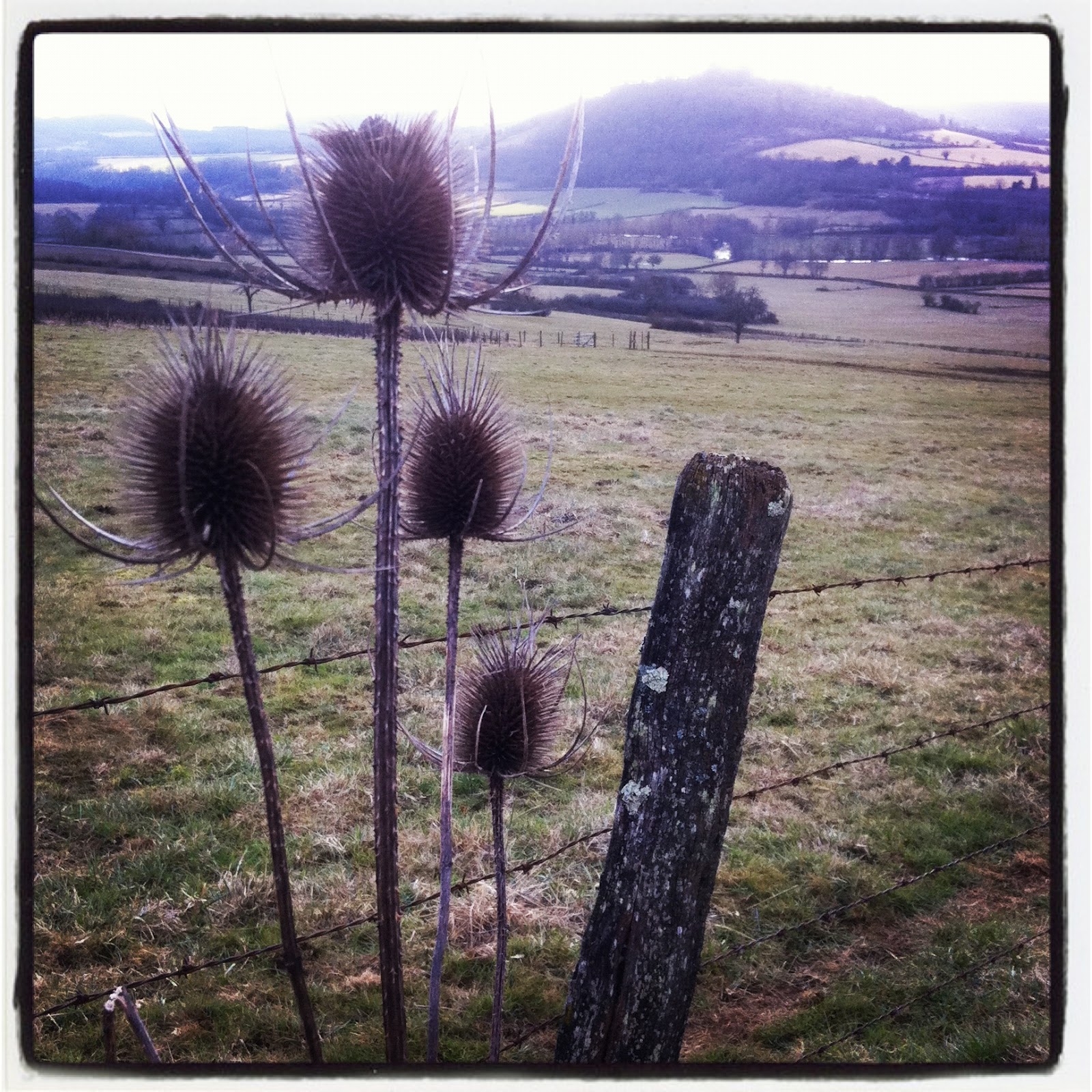
Thistles in Asquins, with the hill of Vézelay in the background


Sunday, May 20, 2012

meanwhile, back at the farmhouse...

Wowzers! It's been a very long time since my last post and I don't even know where the time has gone. Oh wait. I DO know where the time has gone! There was a choir tour at the beginning of April, followed by a number of days in a few installments of work at the farmhouse, interspersed with work-work, a conference in Paris and an operation at the hospital!

First off, the operation was nothing serious, so no need to worry.

The majority of the last two months has been spent on or at the farmhouse. I didn't have any official holidays to take, but between the bank holidays and my time off in lieu of overtime, I was able to squeak in three visits to the farmhouse to get it in shape for the season. Jean-Marc was able to stay longer than me and was there for two extended trips. Why all this time and work? I was hoping you would ask.

the terrace

Caitlin and I had put together a terrace back in 2004, with a mortared stone frame and gravel in the middle. It was the best low-cost option we could come up with at the time, but after a year, the weeds started growing in the gravel and it became a headache for us to maintain. Every year when we arrived, we would easily spend a few days just cleaning up the terrace, never mind keeping it clean throughout the summer! So this was THE year of the terrace.

Jean-Marc started by taking out all the gravel. Having been a part of the team that put the gravel there in the first place, I know that this was no small feat. I did help, but I was also busy with other projects as you will see later.
He then started leveling the ground to get it ready for the stones that we bought. In the meantime, there was a situation happening in the corner that needed attention. By the stairs we had some out of control mint overtaking the terrace and it needed to be contained, so Jean-Marc built a dry stone retaining wall (well, from the outside it looks like it's dry, but he mortared the back of it to give it strength). The mint was taken out and replanted later.
Of course the plan was to lay a stone terrace, so we had to find stones. I looked on the internet on a French version of craigslist (le bon coin) and low and behold, a guy just 7 kms away was selling some lauze. It was originally on someone's roof and then he has used it on his terrace and driveway, but it was too slippery for his daughter's wheelchair, so he dug it up and it was still good enough to use again. So we loaded 18 square metres of the stuff into his tractor, loaded the stone from the tractor into our borrowed truck, and then unloaded it into a pile where it sat waiting to be used. The stones were fairly big and heavy, so our arms and hands got a good workout! We ended up hiring a local stone mason for two days to help us get started and then Jean-Marc finished laying the stone (without doing the joints). It looked like this.
As luck would have it, just as we were ready to start doing the joints, there was the year's biggest storm in our area, with winds of up to 160 km/hour, meaning that the spaces between the stone were filled with dirt, leaves, seeds, flowers and gravel and not at all ready to be filled with mortar! We had to wait a few days and then use brushes and a vacuum cleaner to clean out the spaces. Once it was clean again, we were able to start mortaring the joints. We worked on this together and it was hard work kneeling on the stone. Our hands and knees were aching!

While all this was going on, I was also working on...

the table

With a new terrace we needed a new table! Actually, the one we had put together in 2004 was falling apart, so it was a real necessity. A few weeks before heading to the farmhouse, we had gone for a hike near our house and we came across a nice homemade table that seemed easy enough to put together. We returned, measuring tape in hand, and I took all the dimensions as well as a number of photos to figure out how it was all put together. When we arrived at the farmhouse, I asked my neighbour, William, what kind of wood to use for the table and he said "Douglas Fir" (or doo-glass in French!)- something that he had a whole stack of and was willing to let me use. He helped cut the planks to the right length for the table top and then I planed them so they would be the same thickness.
table top

table legs
I put it all together and then put the legs on once the terrace was done. And voilà!
ta da!
A new table and terrace - not bad, but there was more...

the shutters

We had a couple of pairs of shutters that were falling apart and all the rest were looking rather shabby. Even though they had been painted in 2005, the sun, wind and rain made them look like it had been thirty years since the last paint job. So I MADE two pairs of shutters (I was planning on getting them made but then got talked into making them by William). I also painted all the shutters, new and old.
one pair that I made
I made the upper left pair and painted all the rest
looking down the path
When we bought the house, the shutters were this colour with the white zeds, and although it's big pain to paint in two colours, we have found it to be a good way to identify the house for our renters, considering that there are no street names and numbers in our village. The paint really made the shutters 'pop' and made the ones that are not exactly falling apart - but not far off - seem in better shape. When I finished the shutters, I had some extra planks of wood left over, and then I looked at this area of our garden.

the flower box

The flower box that we had planted a couple of years ago was completely rotten and falling apart, so I put together a new one with the shutter leftovers, stained it and put some extra plants in it. Now it looks like this.
Ok, so it's still on top of a septic tank and there are pipes and whatnot around it, but I think with time, and a few more pots and planters, it will become a poetic spot!

These were all the major jobs that we did, but we also planted a lot of new plants (including a clematis and a honeysuckle), cleaned up the garden, cleaned up the house, made and repaired window screens to keep the flies out, attended to plumbing emergencies, upgraded our electricity so that we can make tea and toast at the same time (crazy, I know!) and put our electricity counter on a peak/low hours deal, so that we can have cheaper electricity at night for things like the hot water heater.

I don't have any fabulous "after" pictures because the weather was awful and I ended up leaving before Jean-Marc, so I never saw the final-final results myself. Hopefully I'll get to take some more photos this summer.

All in all, it was a tiring and exhausting few weeks. Most of our work days were 12 - 14 hours long and very physical. We barely had enough time to cook proper meals for ourselves and we even resorted to eating tinned food but were lucky enough to have William bring us extra hot meals from time to time. There were many moments when the stress of getting everything done on time was overwhelming and there were other moments when I thought it was never going to come together. The weather wasn't very cooperative, but we managed (!) and we are extremely pleased and proud of the results. Hopefully we will get a chance to go the the farmhouse this summer when it's not rented out, so that we can take advantage of our new terrace and table. I'd love to be able to go there, relax and do nothing (although I know that there is window putty, wood oil and plaster waiting for me with my name on it).

Both of us tackled the unknown and we have come away with a thrilling sense of accomplishment as a result of figuring out how to do something and seeing the results. Of course, it helps when there is a neighbour who knows how to do everything and can give advice when needed!
the path to the garden cabin that Jean-Marc made from locally found (i.e. free!) stones

Sunday, March 18, 2012

if you don't know me by now

How long have I been speaking French? At least 23 years, with another 10 years of French at school before that. How is it that I never learned these words? I know that there are 25000 words that are shared between English and French, with the exact same meaning and usually almost the same spelling, and yet...

You try to figure these out!
1. économe
2. police (from an earlier post)
3. enceinte (not the pregnant kind)
4. pleine
5. interrupteur
6. mail
7. émail
8. puériculture

Some of you may know these words already, but here are their meanings.

1. économe
An economist, perhaps? Nope, it's a vegetable peeler!

2. police
The people who stop the bad guys? Nope, it's a font/typeface (I had mentioned this in an earlier post, so you might have remembered!).

3. enceinte
Pregnant? Well, yes, as an adjective, but as a noun it means speaker (as in, what you plug your stereo into).

4. pleine
Feminine version of full? Well, yes to that as well, but it can also mean pregnant (mostly used for animals and considered a vulgar term). "Faire le plein" is a fill-up at a gas station.

5. interrupteur
That annoying person who interrupts you all the time? Nope, it's a light switch. You know, you interrupt the electricity with it (or is it the light you interrupt?).

6. mail (or mél)
The obvious postal variety? Nope, it's an email.

7. émail
Well, it can't mean email (although it's starting to - spelled without the accent). It means enamel. This whole email business kind of thew the French for a loop because the word 'email' was everywhere, but it meant something different in French, and so they tried courriel, mél, mail and are coming around to email.

8. puériculture
Is it the official word for fish farming? Nope, it's childcare. Seriously? Seriously! Seems kind of scientific and technical to me.

There are numerous examples of words that take a little getting used to in French, especially when coming at the language from English. I would say that I'm fluent, but there are still words that completely stump me. I have noticed that when I'm tired my ability to speak French coherently diminishes, which I find extremely frustrating. Sometimes it would be nice to be able to express myself 100% and not have to struggle with getting my thoughts across. Some things really are lost in translation. The worst thing? My English is getting rusty!

Sunday, March 11, 2012

winter vineyard

There is a small vineyard below the building where I work. For the most part I never see people in it, but the other morning I saw a group of workers pruning the grapevines and burning the branches. You can see the figures of the workers hidden in the fog.
And then later that afternoon as I was leaving, there was a lovely light hitting the vineyard. Same place, different time of day.

As an aside, this is the kind of work that Jean-Marc has been doing for the last couple of months. He's been clearing the pruned branches from the vines, after someone else has done the pruning, and once the branches are freed he breaks them and puts them on the ground in bundles, where they are ground up for mulch.  It's hard work because the vines are attached to the guide wires and other branches, so it means a lot of muscle is needed to separate everything (while not damaging the vine!). I think Jean-Marc is appreciating wine and the work that goes into it in a whole new way!

The bonus is that he sometimes gets paid in wine.

Friday, February 17, 2012

truffles for sale

I saw this in our local café the other day. Truffles for sale for only 25€/100 gr. That's 250€/kilo! Jean-Marc has a month's work in the vineyards and he's seen people looking for truffles nearby his work. Maybe he'll get lucky one of these days and strike gold!

Wednesday, February 15, 2012

language musings

I have been speaking French for the last twenty years and have been living every day in French for three years, and yet I am surprised by the French language all the time. Sometimes I get muddled in the specificity of terms because in English there is one word and in French there are numerous words for the same thing, depending on its shape or material. Take the word 'box' for example. In English, we just put a modifier in front of the word and we're good to go: shoe box, cardboard box, gift box, metal box, wooden box or just a box on a page. In French, there is a different word to learn for each one of these items. Let's take them one at a time.

shoe box: une boîte à chaussures 
carboard box: un carton
gift box: un coffret cadeau
metal box: une boîte métallique
wooden box: une caisse en bois
box on a page: une case


I remember looking up box in the dictionary twenty years ago and I thought that the translation was boîte, but when I started using it to refer to a cardboard box that I had, I was corrected, making me aware of the complexity of it all!

Then there was the time that I was with my in-laws and I mentioned putting some fruit in a big bowl on the table. I just said un grand bol, thinking that they would get the picture. Their eyes became very wide and I could tell that they had no idea what I was talking about. "You know, a BIG bowl," I said, miming the shape of a big serving bowl. "Oh, you mean a saladier!" they exclaimed, finally getting it. Yes, but in this case there would not be a salad in it and actually I was talking about a bowl that would never have salad in it, but never mind, it's called a saladier whether you are using it to mix dough, display ornaments or whatever. A grand bol would be a bowl you would use for cereal, soup or maybe a large latte.

Not unrelated to the bowl incident is what to call the somewhat shallow bowls that we have. For Jean-Marc they are assiettes creuses (hollowed plates, or soup plates to be fair) whereas for me they are shallow bowls. Plate or bowl? There's no rim and the sides go up, so it's a bowl for me, but for Jean-Marc it's not what he drinks coffee out of, therefore it's a plate.

I can also recall a time when I mentioned the toilet. Now, I had always just assumed that the actual, physical fixture was called une toilette because we do ask where the toilettes are, after all. Jean-Marc did not understand what I meant; whatever I wanted to do with (or put in) the toilet just seemed impossible to him. I said "you know, the white thing you sit on in the toilettes" and that's when he informed me that this thing wasn't called a toilet. What? I've been getting this wrong for over twenty years? At the time, he couldn't even come up with the right word (it's une cuvette, in case you are wondering).

And then there's anything to do with education. I was on the phone with a training centre about a course I was interested in taking. I referred to it as a cours and the guy on the other end of the line was very quick to explain that it wasn't a course (that's only for diploma-granting institutions) but a formation or training session. I should have known this because back when I was an English teacher, I was a formatrice and not a professeur. I can see the difference between teacher and professor in English, but in French there is a whole sublist of possibilities, depending on where the teaching is happening. In elementary school, you can have a maître, maîtresse, institutrice or instituteur. In secondary and higher education you have a professeur and outside of that, there is also enseingant(e) and educateur/educatrice, as well as formateur/formatrice. The same thing goes for students, who are élèves (elementary and secondary), étudiants (post-secondary), stagiaires (continuing education or training), collégiens (junior high) or lycéens (senior high). Every time I have to talk about teachers and students I get all worried that I'll get it wrong!

Oh, and do you know the word for font or typeface? Police! Seriously, it's police.

Saturday, January 28, 2012

cheese (or, 450 reasons to love France)

OK, so I've counted and we currently have nine sorts of cheese in the fridge, or ten, if you count cottage cheese as cheese. We've got our regular staples:
1. parmasan
2. feta
3. gouda - I am Dutch, after all!
4. camembert - impossible to live without, according to Jean-Marc

And then we have a selection that I picked up on the way home from our snowshoeing trip in the Jura mountains:
Clockwise from the top, we have:
5. aged bleu de Gex
6. tomme de Jura
7. aged morbier (with ash running down the middle)
8. chèvre with truffle oil
9. brebis (sheep milk) with piment d'espelette or espelette pepper, from the Basque region

Our boss had organized a cheese-tasting at a famous fromager's shop in Gex, a city at the base of the Jura mountains. A fromager is someone who not only sells cheese, but ages it himself - sometimes for years and years - before selling it in his shop. France has over 450 kinds of cheese, which means there is more than one for every day of the year! This particular store had over 300 varieties to choose from and I thought it quite impressive to find a shop with two-thirds of the country's cheese selection in stock.

We tasted a number of regional cheeses and in the end we all bought some to take home as a souvenir. When we got back in the car after stopping at a rest stop for a coffee on the way home, the smell was something else (!), but we soon got used to it. Sometimes you have to suffer in order to enjoy the finer things in life!

Sunday, January 22, 2012

a surprise trip

A week ago, everybody at work was asked to reserve the following Monday - Wednesday, nights included, without being told why. Then at the end of the week, we received an email asking us to be prepared with a packed lunch for Monday, three days' worth of clothing, a swimsuit and clothes suitable for snow. The plan was to leave Monday morning at around 10 or 11am and come back Wednesday night around 10pm.

So Monday came around and the six of us got into two cars and we started heading south. After eating our packed lunch at a rest stop, we started driving east towards Switzerland. We drove past Geneva (or at least 14 km away from Geneva) and started going up some mountains in the Jura region. We ended up checking into a hotel in the town of Lamoura, which is a small winter sport centre with access to downhill and cross country skiing, as well as snowshoeing, and discovered that we each had rooms overlooking the snowy countryside (and not the road out front!). After dropping our things off in our rooms, we set off to rent our snowshoes for our stay and we then took advantage of the remaining daylight hours to get a bit of snowshoeing in.
The hotel had a wooden chalet feel and it was demi-pension, so breakfast and supper were included. The first evening before supper, we gathered for aperitifs in one of the hotel rooms and enjoyed 2 bottles of champagne that my boss had brought along. The second evening we had 2 bottles of red wine and we played Time's Up in teams of two (it's a game where you have to try and get your partner to guess a word, either using long explanations, just one word or mimes).

During our stay, we had two full days of snowshoeing and we explored a lot of the trails that are scattered around the ski hills, snowshoeing about 10 - 12 km per day. From time to time we would come across chalets where it was possible to have a mulled wine or cup of cocoa, and on both days, we packed a picnic and enjoyed our lunch in the snow. We lucked out with the weather because it was nothing but blue sky and sunshine. Just have a look!

Did I mention that our office dog, Eclipse, came along too? She *loved* the snow and spent her time fetching snowballs, some of which were much larger than her head!
On the way home we stopped at another mountain peak and went to a restaurant for some tea. The sky was clear and there was a panoramic view of the Alps across the valley. We could even see Mont Blanc. It's the biggest one there in the middle.
Further down the hill we stopped at a fromagerie to buy some local cheese before going home (I'll write more about that in a future post).

We arrived home in one piece on Wednesday night. It was nice to have time to bond with my work mates and just have fun together without thinking about work. I think that was the point!

Wednesday, January 11, 2012

paperasse part two


(another catchup session)
This is an ongoing theme here! Paperasse, or paperwork, is really stress-inducing in France and every time there is reason to change or update papers, just the thought is enough to create a knot in my stomach. SO! Second move in a year? No problem. I told myself I could do this.

carte grise
The carte grise is the car ownership paper that needs to be kept up-to-date in terms of current address. If you don’t do it after a month of moving and are caught, you can get fined and lose points off your licence (but for some reason, the licence doesn’t need to be updated!). Changing your address on your carte grise means a trip to the préfecture or sous-préfectures and proving your new address with a utility bill.

So we drove 15km into Avallon with our rental agreement in hand and went to the sous-préfecture to change our carte grise. Of course once we got there, we learned that a rental agreement is not proof enough of an address (ANYBODY could make up any old rental agreement) and since I had taken time off work to do this transaction, I drove back home to get the paperwork needed. They wanted an electricity bill (and those couldn’t be made up in photoshop?) but I was hesitant to use our electricity bill because we have three (yes, that’s 3) street names on our bill. Why? Good question! It has to do with the street changing names over the years and nobody being willing to accept the correct address. So I brought the bill, along with a stack of other papers showing the correct street name, back to the sous-préfecture and they were able to process the address change for both of us, although we did have to prove we were married – because the bill was in Jean-Marc’s name – and I needed to insist on keeping my own name for the new sticker. Sixty kilometres later, we were both done.

Back in Canada we don’t have anything like a carte grise, but it seems to me that when I moved I was able to change my driver’s licence online in a matter of minutes and that was that.

banks
Changing your address with a bank also requires sending by mail (not fax, not email) proof of address, along with an accompanying letter requesting the change. I sent off the request along with the rental agreement, but – you guessed it! – that was not the right thing to send off. The letter was returned and I was asked to send the valid proof and so I sent off the electricity bill with the three street names, explained the situation, and I threw in a few other bills, just for good measure.

The change was made, but just for one of the two accounts I had requested, so I had to call the bank and request the change for the second account. They gave me the song and dance about sending proof and I said that it had already been sent in. The decidedly unhelpful and unfriendly person at the other end of the line finally understood the situation and begrudgingly agreed to change the second account’s address. Just today I received the bank statement from this account through redirected mail, so the change didn’t actually get done. Somehow I'm not surprised. I’ve written yet another letter requesting the change again, and I’m sending it with a stack of justificatifs de domicile. Third time lucky?

I also needed to change my address with my Canadian banks. I called and spoke to cheery, helpful people who were willing to change my address and take my word for it (after I correctly answered the security questions, of course!). I did both Canadian banks in under 5 minutes.

carte de séjour
After being the proud owner of my carte de séjour for six months, it was time to put in a request for a new card. I went to the town hall and made my request and the secretary thought that the card should come sooner than last year’s, which took almost seven months to arrive. To my surprise, after only two months, I was summoned with Jean-Marc to the préfecture in the big city of Auxerre, which is 50 km away. I thought maybe we would have an interview to make sure that we are really married and together, but we just needed to sign a declaration together, stating that we are living together. We drove 100 km to do that? Couldn't we have done that in front of the mayor at the town hall? They said that the card should arrive in a month. Imagine my surprise when I found out that my card had arrived at the town hall just before Christmas! I was told to buy fiscal stamps to the tune of 104€ (their way of collecting the payment) in Avallon and present them at the mairie to get my card.

We went to the place where you buy fiscal stamps and when I told them the amounts (one for 85€ and one for 19€) they were confused. There are various sorts of stamps for various sorts of transactions (passport, citizenship cards, driving fines etc.) and they are all at specific prices. They didn’t want to sell me the wrong kind of stamps because getting a refund is a chore (oh really?) and the stamps were changing at the end of the year. I thought that it was a prudent suggestion and I decided to check in with the village secretary first thing Monday morning.

First thing Monday morning I called only to find that the town hall was closed between the 19th and the 29th! So this little new card had to wait until 2012 to be paid for and picked up. I went in yesterday with my stamps, but the person at the desk wasn't the regular secretary and she had no idea where my card might be. Call me crazy, but I think that a filing cabinet would be a handy thing to have in an office, as opposed to binders and files stacked in boxes! That way the cards could be found under 'C' for cartes. Filing cabinets are so not French.

Why do taxes, fees and fines need to be paid for with fiscal stamps in this day and age? Why couldn’t I just write a cheque, pay in cash or – and I know I’m going out on a limb here – pay by debit card? 

Sometimes I really miss simplicity.

Sunday, January 8, 2012

our house

Ok, so after all this talk about the new house, I bet you would like to see and hear more about it! I was actually wanting to get the house in better shape (painted and more furnished) before taking photos, but that’s what I thought about the last place we lived and, well, that day never came. So here we go, here’s our house! I’ll take more photos when the weather is a bit better, so you can see it with the sun shining out front or in our courtyard.
This is our entrance. There are actually two front doors: a mostly glass one (that was perhaps a store-front door?) and a newly-installed wooden one that was a result of the village's architectural demands. In the summer, we keep the glass door open, so that the wooden one is visible to the public. The bonus of having two front doors is the sound and heat insulation that it provides. The things on the walls are various cards, photos and posters that we have displayed on fishing line that is tightly attached to two hooks.

Beside the entrance is our living room, whose windows look right on the sidewalk outside. The the floor on this level is cement tiling that was typical in the 50s in France. See those two chairs? 5€ at a charity shop!

This is a close up of our front window, which is not at all typically French and more like something you might find in Holland or England!

After the living room, you pass through a hallway that has stairs going up to the other floors as well as the first separate toilet. There is a French door (with glass panes) and then you are in the dining room.
The dining room has three windowed doors that open to outside and it also has a fireplace. The curtains belong to the landlord, just in case you were wondering what was going on there.

This room is actually big enough to be a sort of family room, with dining and living areas, but we don't have the furniture for that quite yet. So in the meantime it's just our little table in this big room, along with a bookshelf.

After the dining room, off to the right, there is a door that leads to the kitchen, which is divided into two parts: upper and lower.
This is the upper part (looking dark, but it's actually quite bright), with a sink and counter with cupboards on one side, 
and a fridge and more cupboards and countertop on the other side. I should mention that this is virtually unheard of in France, especially in rentals. As I mentioned before, normally all you get in a kitchen is a sink and one cupboard underneath. The rest is up to you!

And then there is the lower bit with a second sink.

They left us the stove and everything!

I found this old mailbox at a charity shop and decided that it would be a good bread box. What's funny is that it has the number nine on it and I bought back when were were living in Savennières. Our current house number? Nine!

Going upstairs, there are two rooms: the office and our bedroom, with an adjoining bathroom. Oh, and a walk-in closet!
This is the office, which is a huge room with two windows and enough space to have another guest room. I'll post pictures once it's more put together.

This is our bedroom, with windows looking east, over our backyard. We even have a nice view of the countryside and a neighbouring hilltop village. The bathroom is accessible from the bedroom and the hallway.

Up one more flight of stairs and you have a furnished bedroom (no pictures for the moment, I'm afraid - it's been too dark) and a swank guest bathroom that has a skylight and a sitting tub with shower.

As I mentioned, once the weather is a bit brighter, I will take more photos of the inside and add some exterior photos, so you can see what it's like.